- Recent Works
- 28 January, 2022 – 8 March, 2022
- Trieste Contemporanea
- Trieste
- Solo Exhibition
- Event website ◳
-
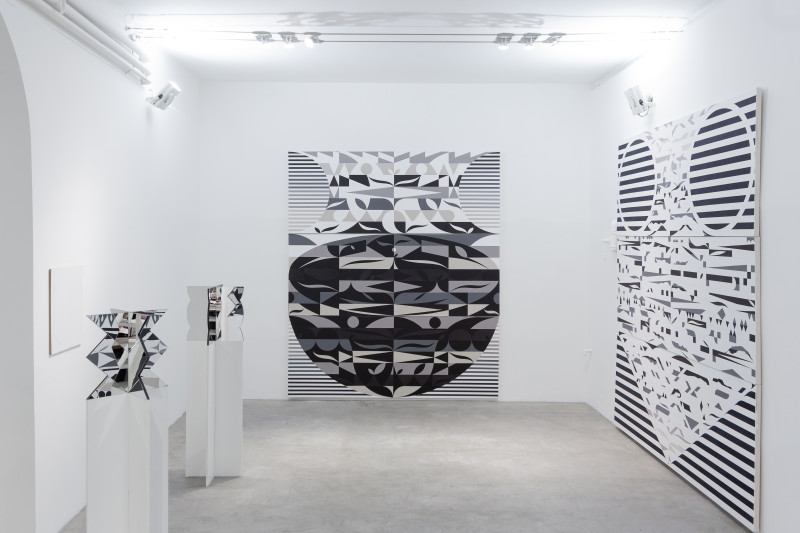
Photo: Francesco Chiot -
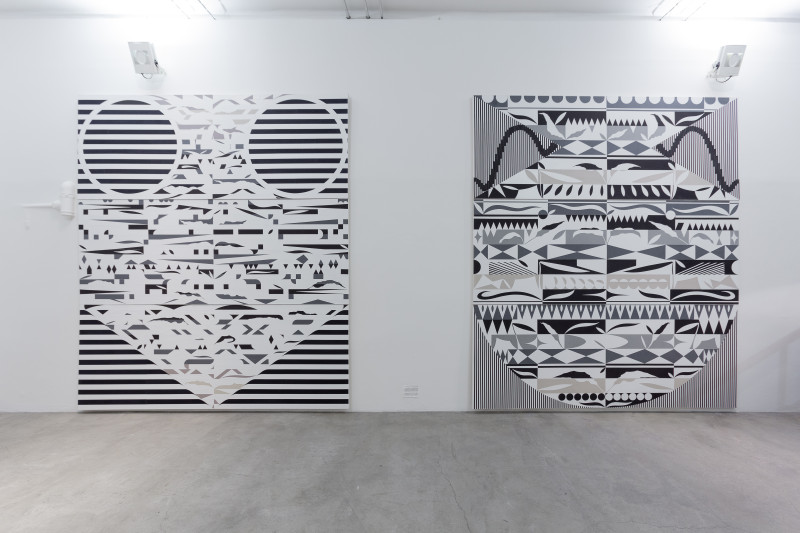
Photo: Francesco Chiot -
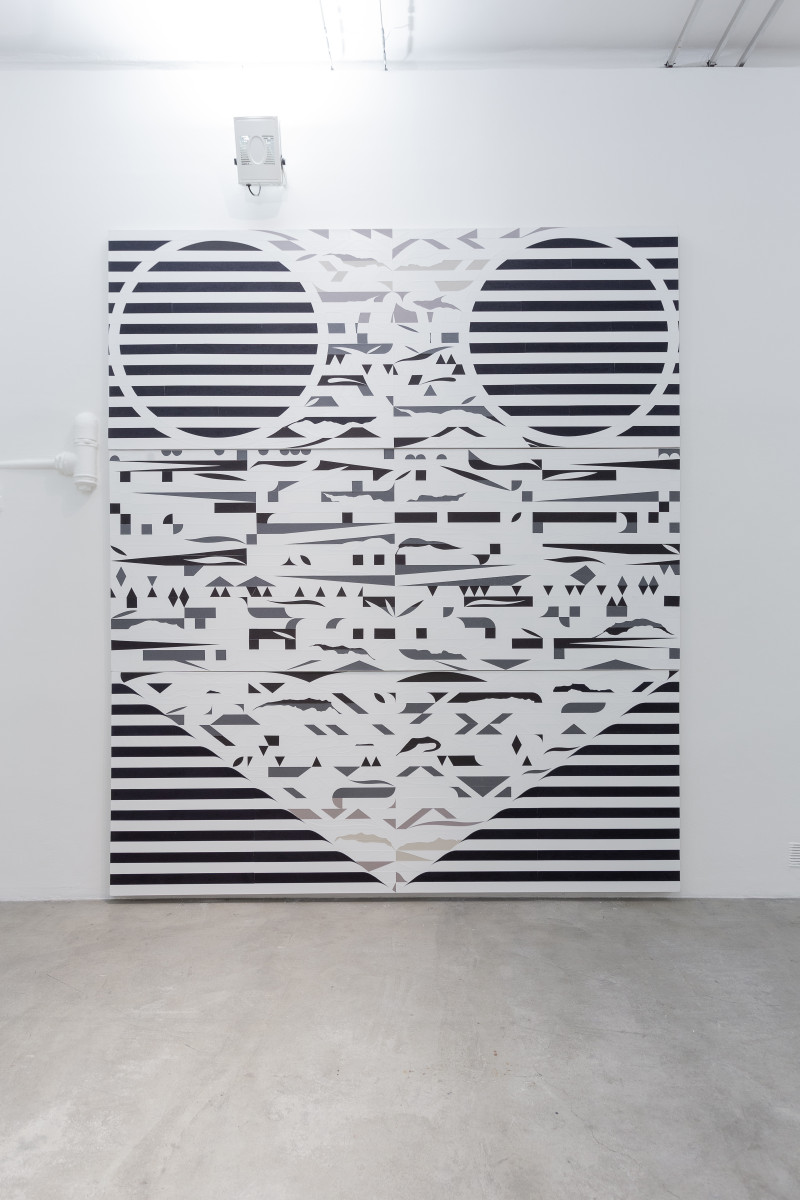
Photo: Francesco Chiot -
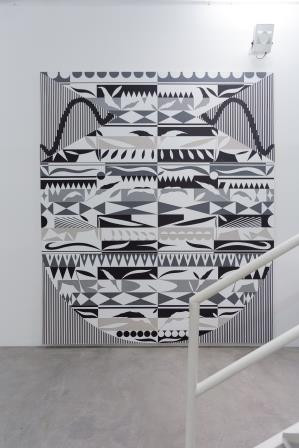
Photo: Francesco Chiot -
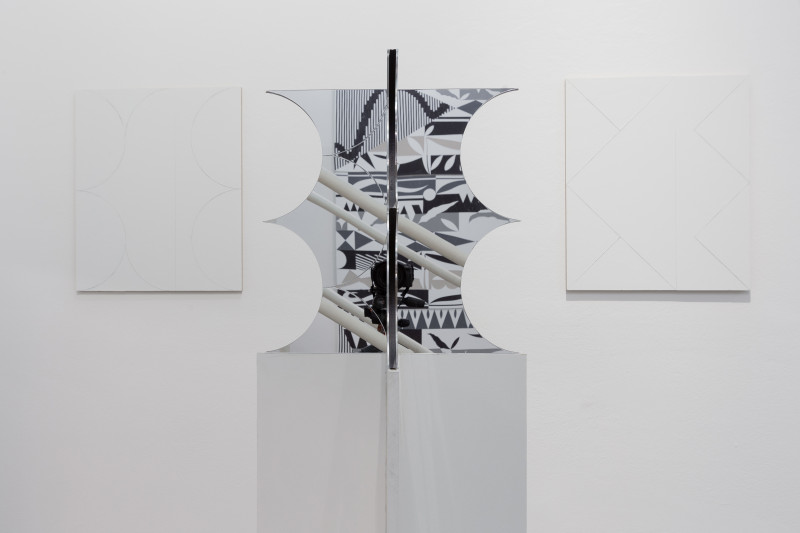
Photo: Francesco Chiot -
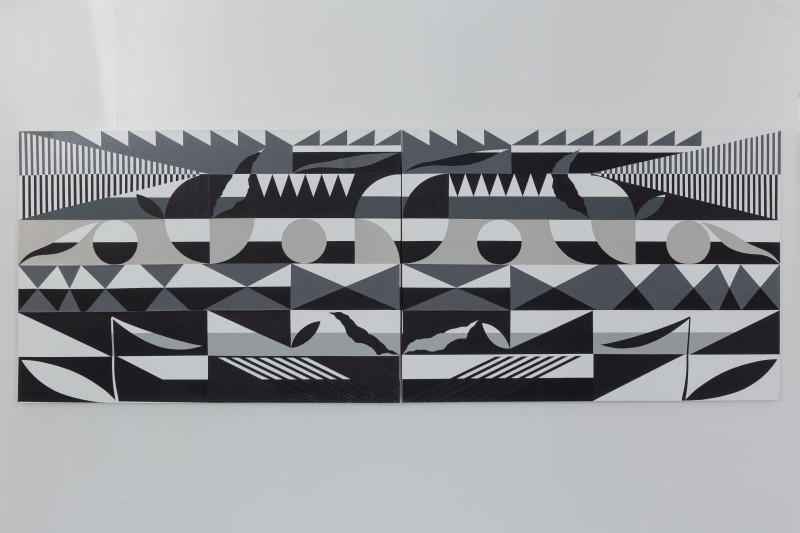
Photo: Francesco Chiot -
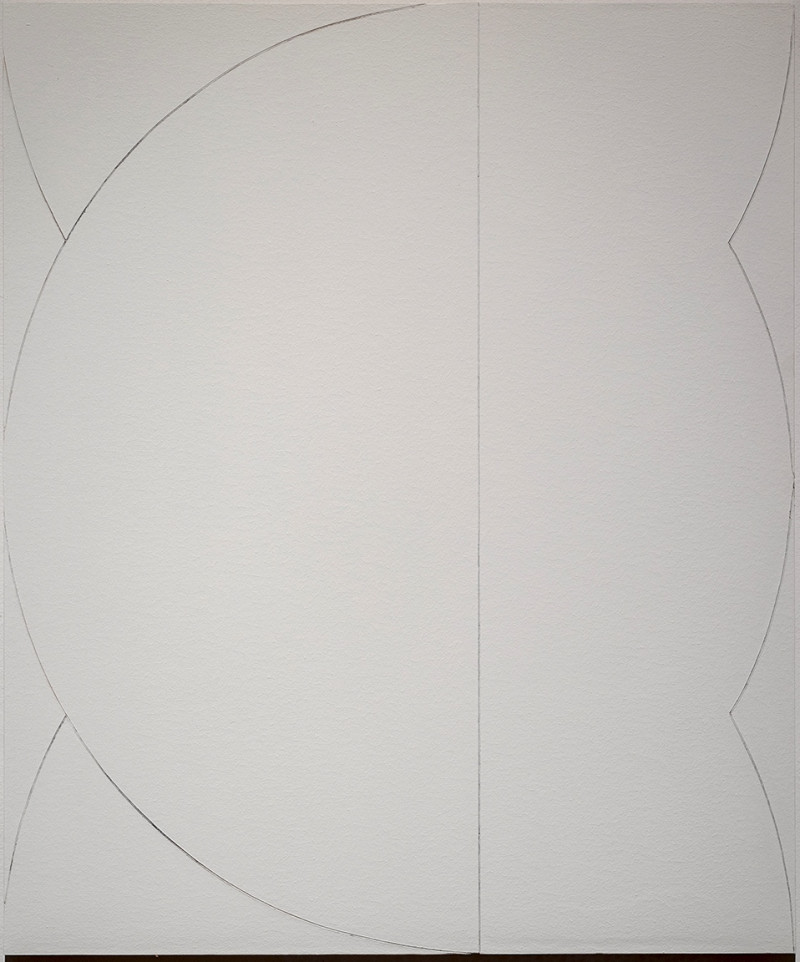
Photo: Francesco Chiot
Text by Janka Vukmir
Damir Sobota is an artist whose interest is concentrated around the possibilities and systems of geometry in the construction of artworks. In Croatia, there is a huge national corpus of works created within the framework of abstraction starting from the 1950s and the works of artists from the EXAT 51 group, which was upgraded over the decades to include exhibitions embraced by the New Tendencies, and later through elementary and primary painting and post-conceptual works from the 70s and on. Sobota, of course, without rejecting domestic sources, is primarily related to the geometric abstraction of international provenance. Born in 1988, he certainly accessed via Internet relevant information and literature and, firstly of course, through his education at the Zagreb Academy of Fine Arts.
His works, as he says, are created in series. Each series concentrates on a few questions, problems or challenges that he asks himself, and that make him decide in advance on the system he will apply to realize the works. He takes decisions based on research, but also intuitively, as he ultimately performs the work.
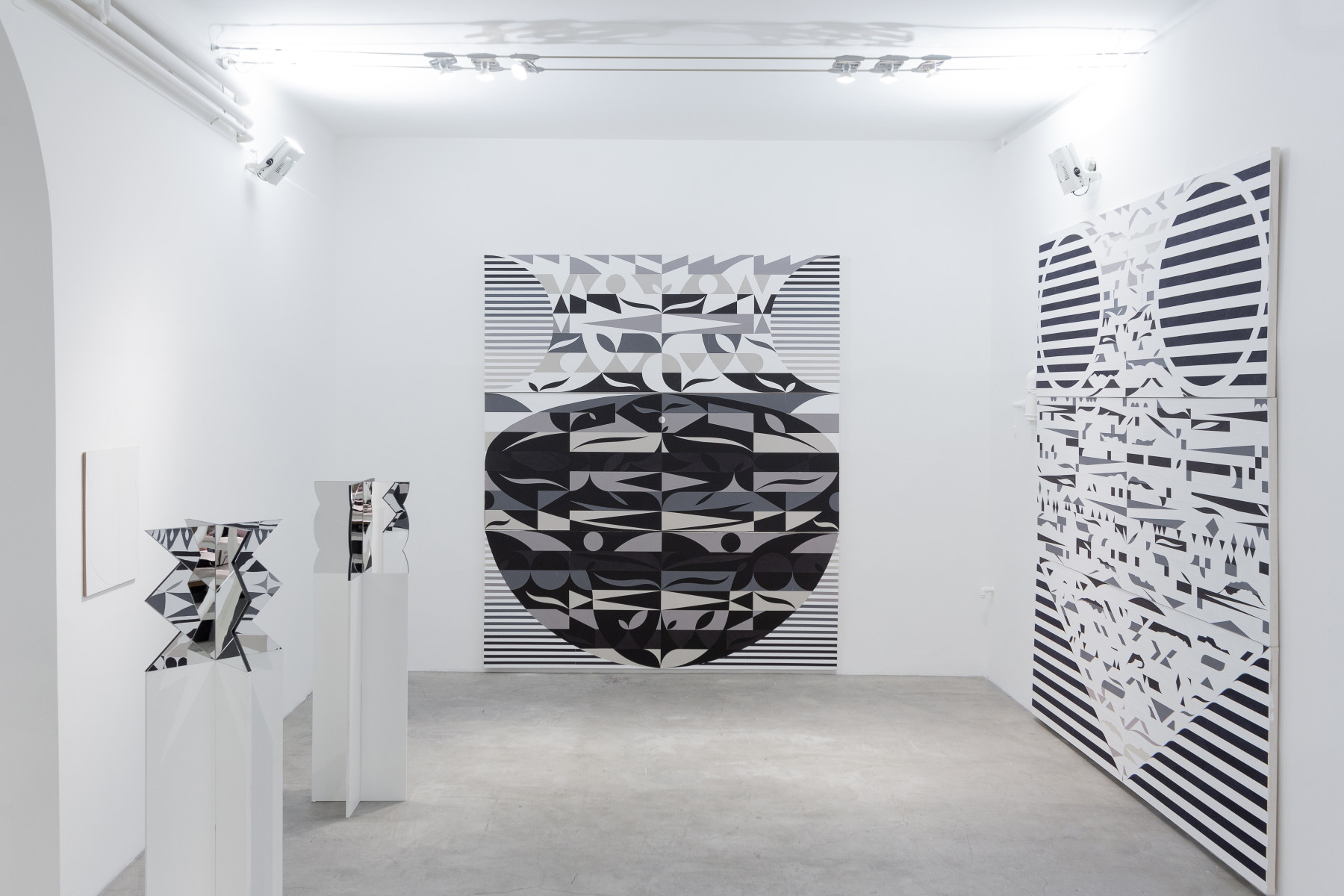
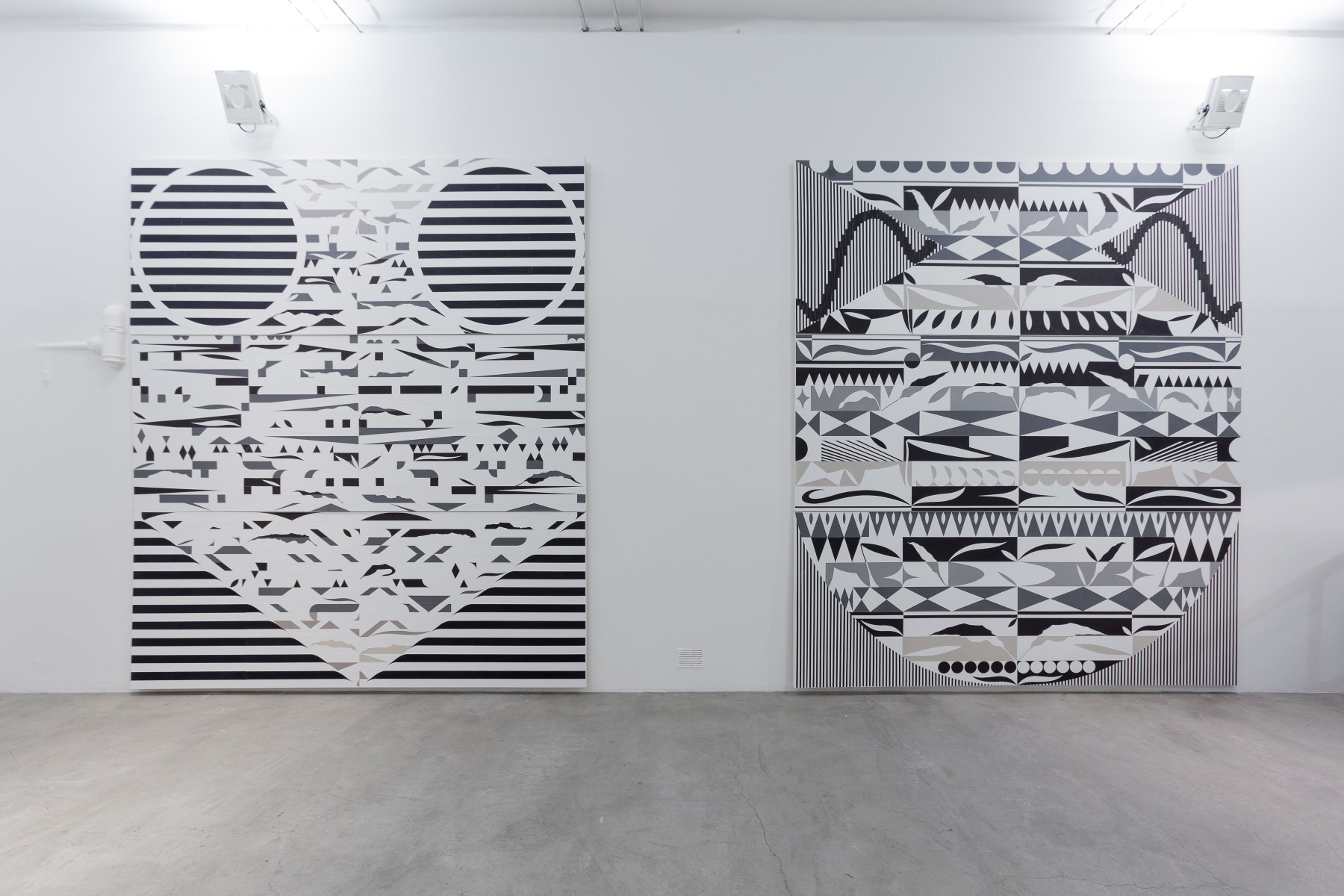
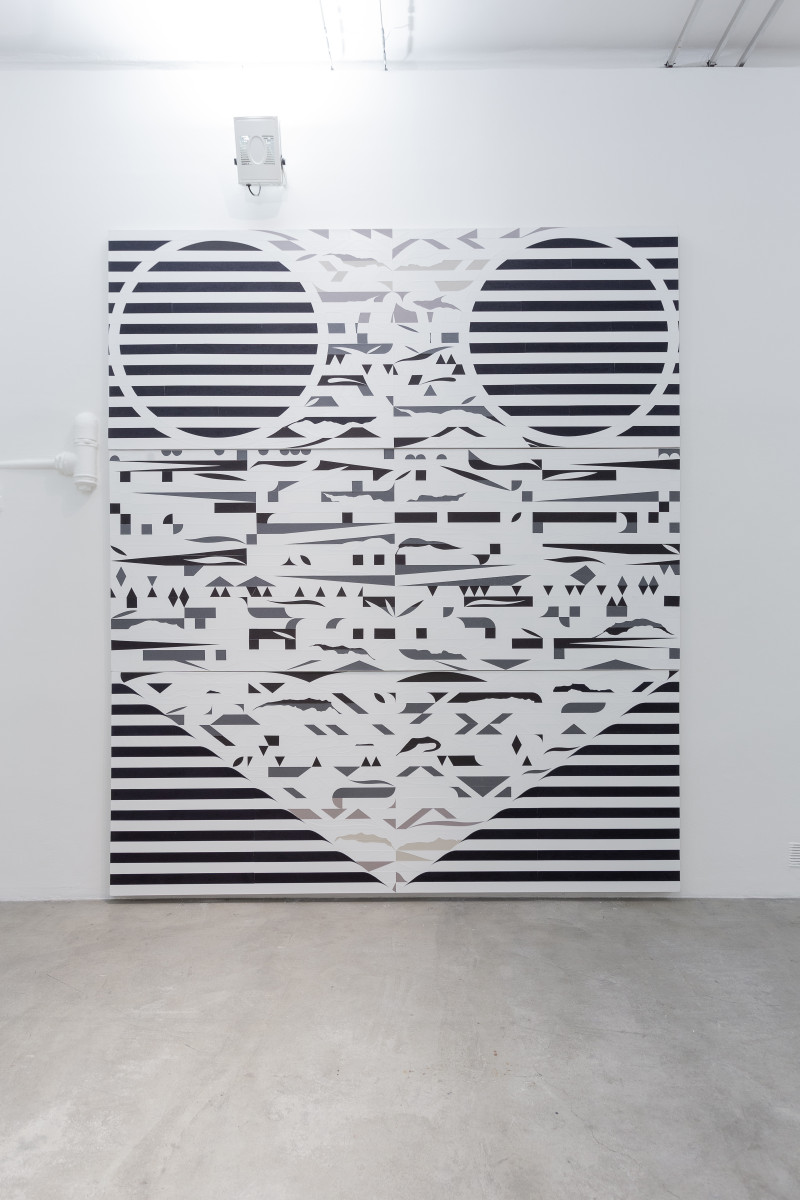
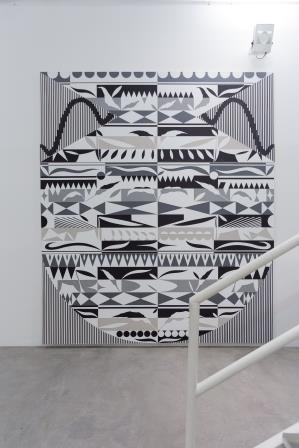
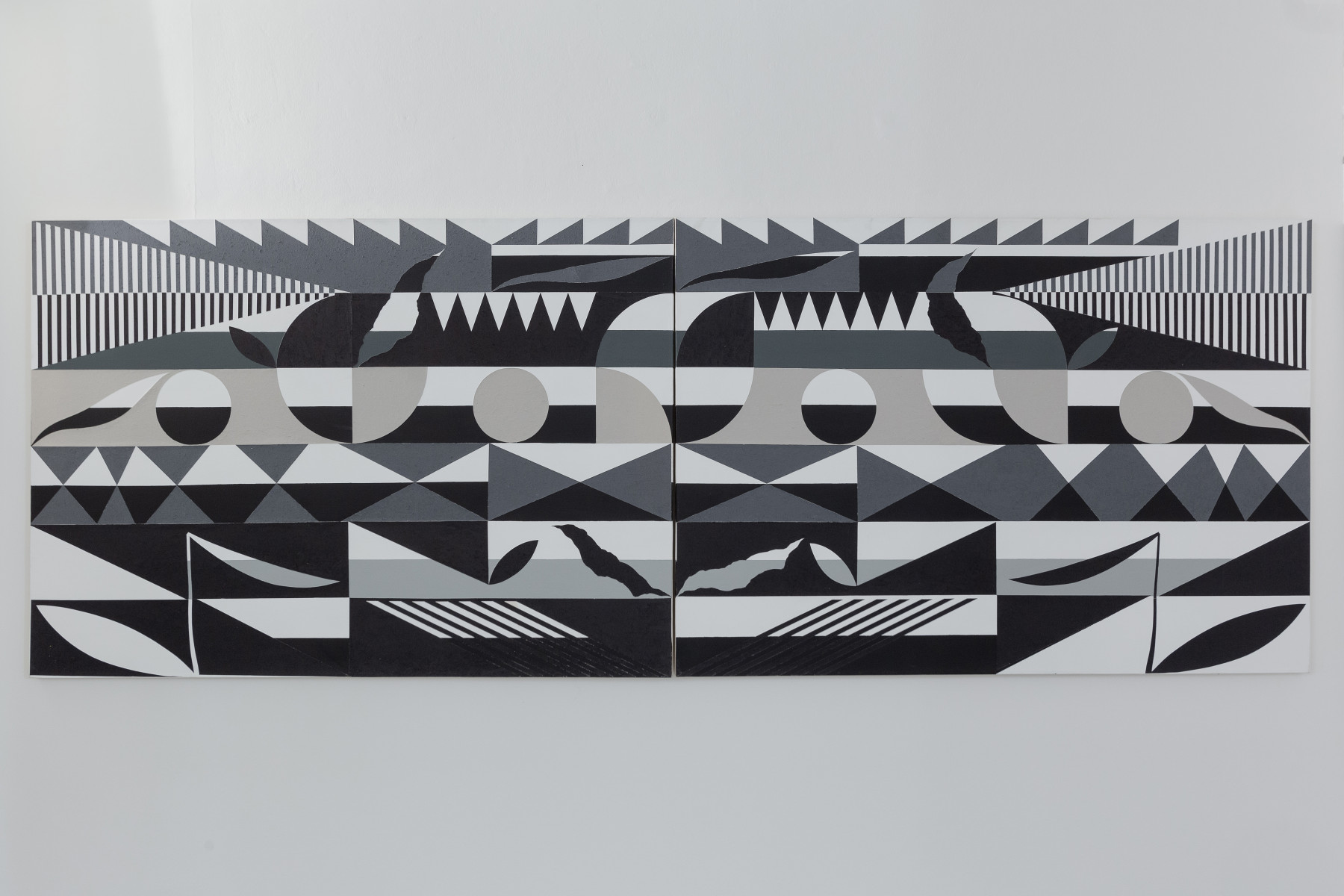
At Studio Tommaseo, he presents works from two series: Palindrome series – which he premiered in 2020 in Zagreb and which he later exhibited at the Radoslav Putar Award exhibition Finale 2020! in Split – and Systemic Paintings and Objects series – which he presented at the Institute for Contemporary Art in Zagreb upon his return from his residency in New York. For the exhibition in Trieste from the Palindrome series we singled out achromatic polyptychs of paintings / collages. The paintings consist of three separate elements that together form a whole, but in each individual element there is a legible geometric concept of congruence, which, like the linguistic palindrome, reads the same backward or forward. The collage paper was cut and glued in several layers making a balanced but not an identical mirror composition. Also, although they act as a binary composition of positives and negatives, of black and white, each image actually carries multiple tones of grey, blue and ochre.
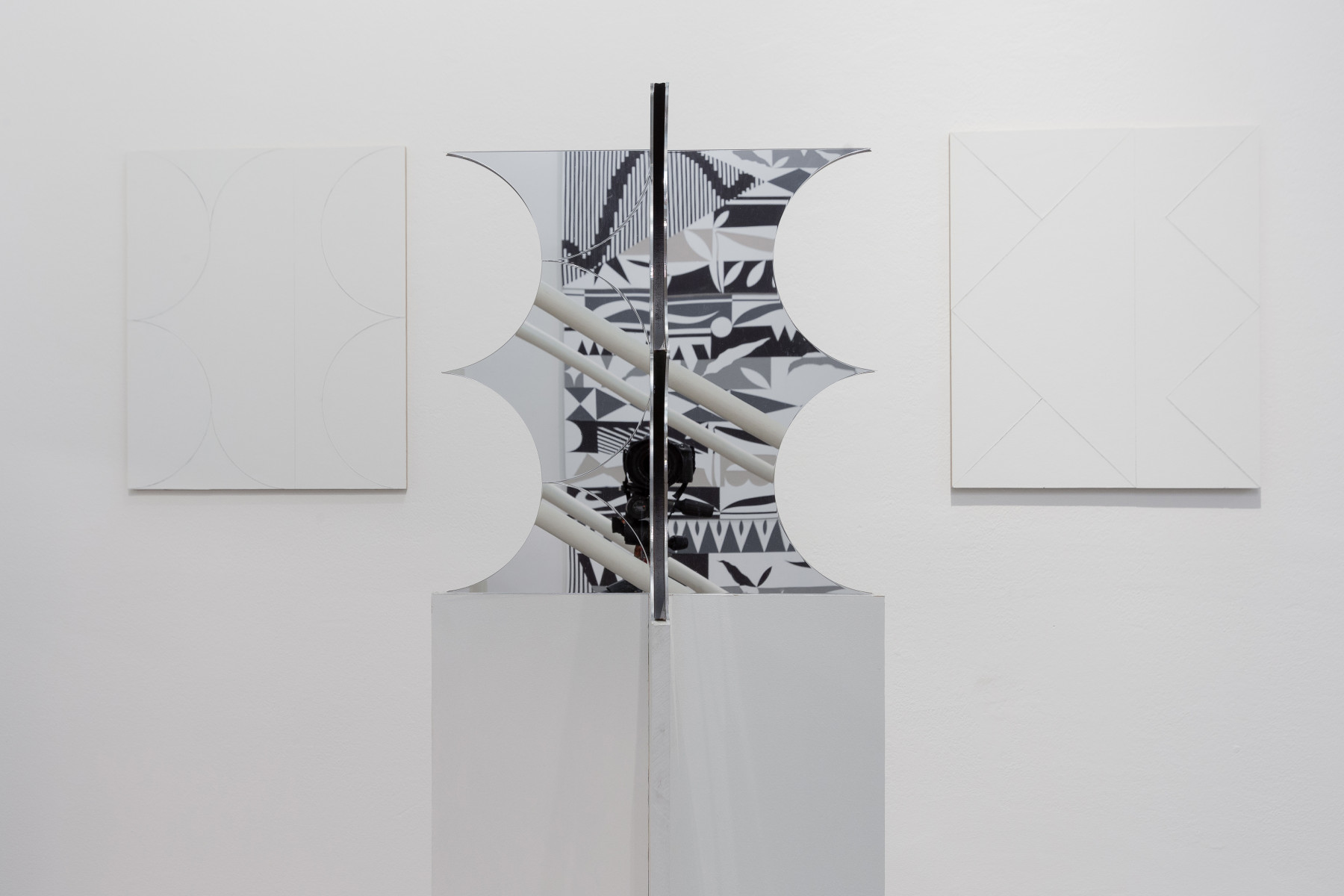
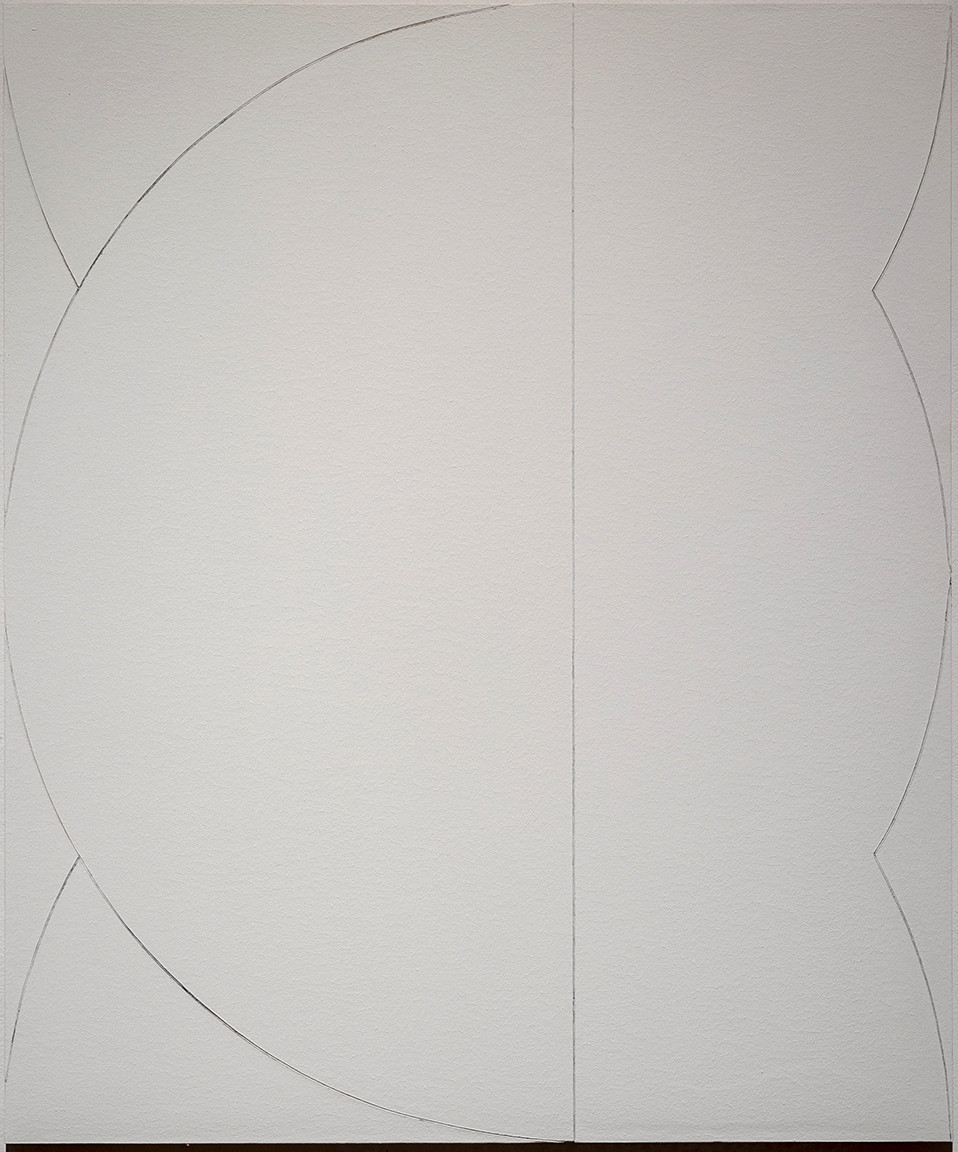
In the works that composed at the end of 2021 the Systemic Paintings and Objects exhibition held at the Institute for Contemporary Art, Sobota is further developing his interests. The former interest in coloured field, minimalism, geometry, surface or line, now continues with questions of dimensionality and space. In the series of Systemic Paintings and Objects the congruence is only fictional: a reflection of the lines on a reflective, mirroring plexiglass. Machine-made objects bring their industrial anonymity to the works, but, as they return on their surface the image of the environment, visitors find themselves part of the exhibited object, and tucked among its leaves together with the gallery space itself. When I speak of “leaves”, it comes to my mind to associate them to Vojin Bakić’s Razlistane forme (leafy forms), except that Sobota does not speak with the surface but with the edge of the object, which gives concavity and convexity while to the surface are given only lines transmitted by reflection. Although these 3D works could function independently, on specially made pedestals that correspond to the shape of the object itself, they act and respond to the actual continuing lines of objects on the wall. Sobota presents these works on the wall as paintings, but in fact they are collages and even low reliefs on paper glued to MDF board, mimetically painted with wall paint to blend, into the gallery, with the surroundings. Although they are collages, these objects still are reliefs, and paintings (even if they are “collaged” reliefs and paintings). They evoke sotto voce the art history of white monochromes by Ben Nicholson, Agnes Martin, Lucio Fontana and a number of other artists who have dealt with the concept of space. All these objects are placed in the gallery so that, while they are approached, they offer different views in motion in which they intertwine and foster a systematic approach to their geometric components. The works thus gain certain processuality, movement and time, but also the traits of a game – and visitors, if they wish to be in it, may find their own key for reading works and interrelationships.