- Colours & Shapes
- 11 February, 2016 – 20 March, 2016
- Gallery RAGA
- Zagreb, Croatia
- Solo Exhibition
- Event website ◳
-
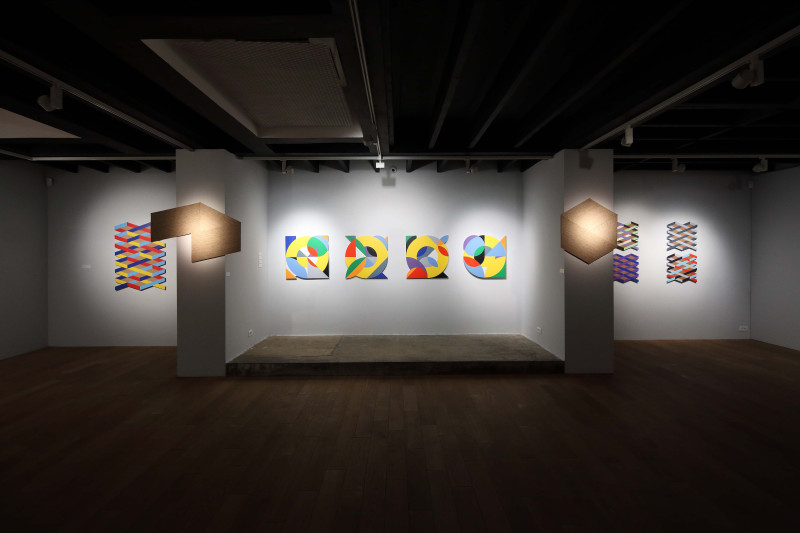
Photo: Goran Vranić -
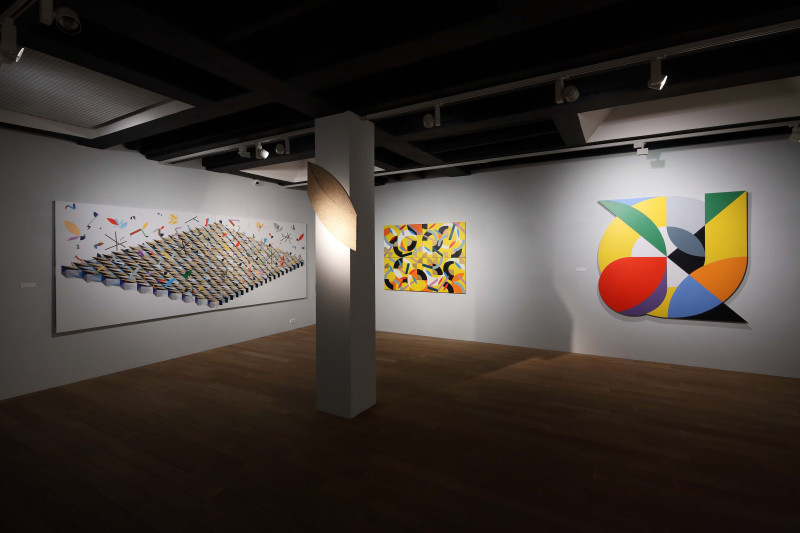
Photo: Goran Vranić -
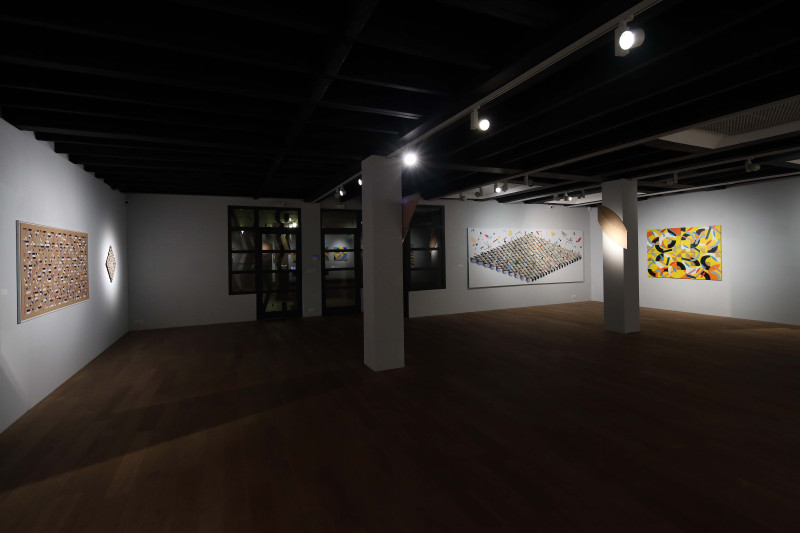
Photo: Goran Vranić -
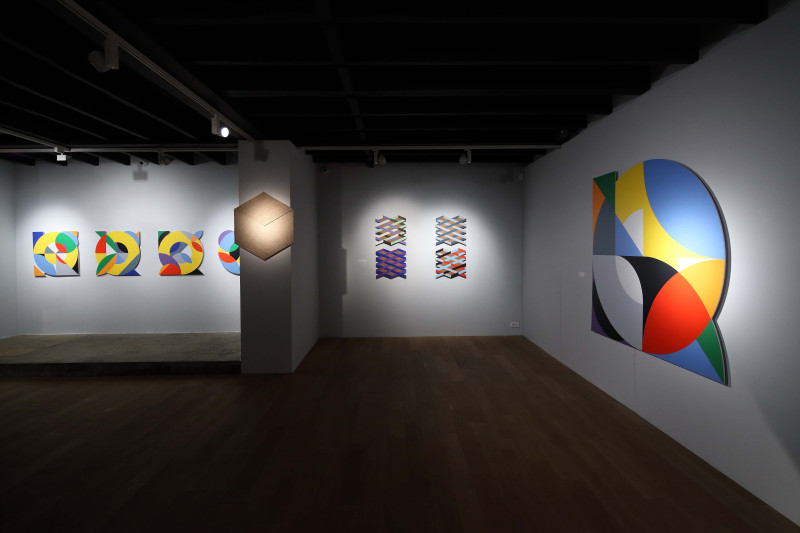
Photo: Goran Vranić -
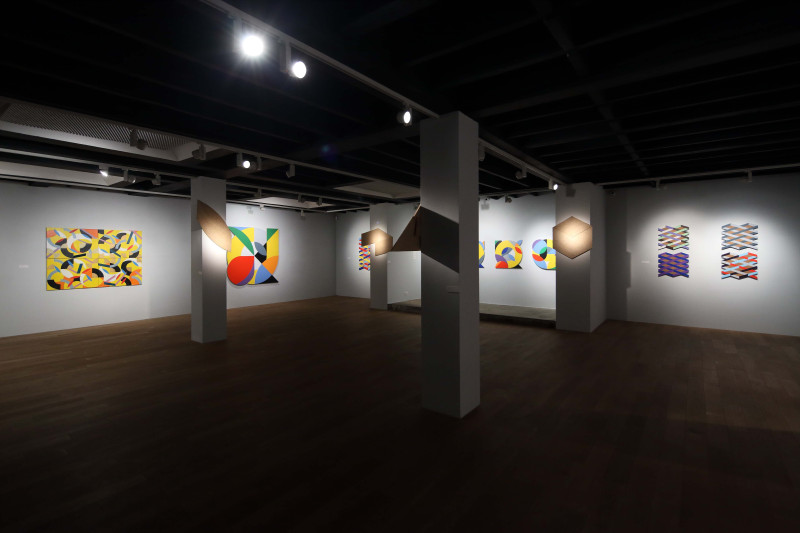
Photo: Goran Vranić -
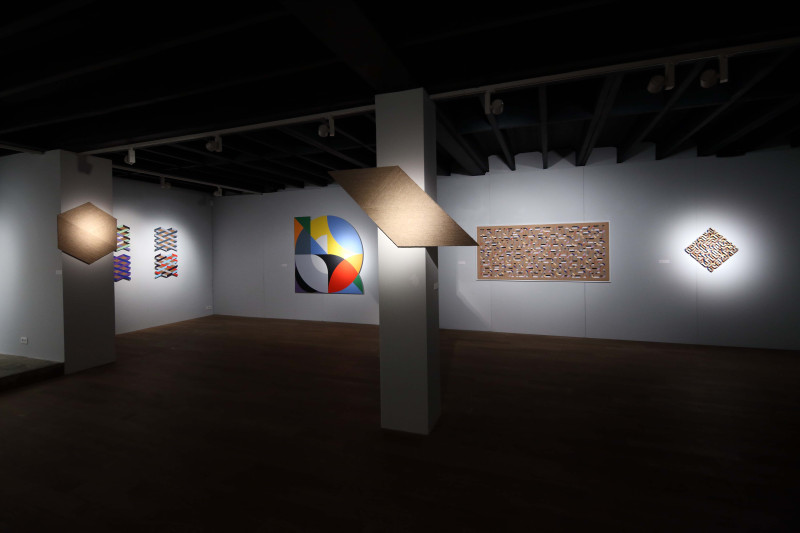
Photo: Goran Vranić
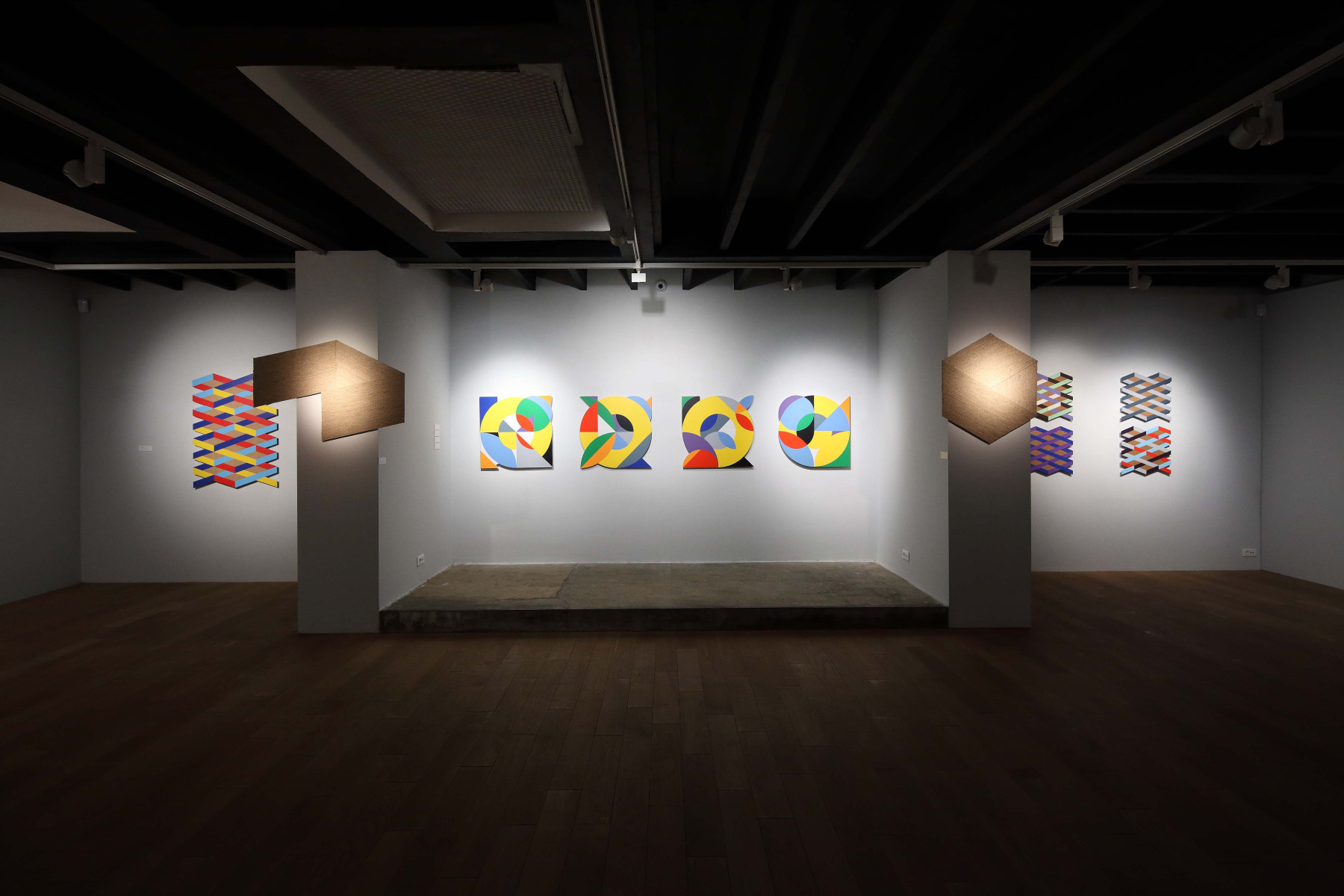
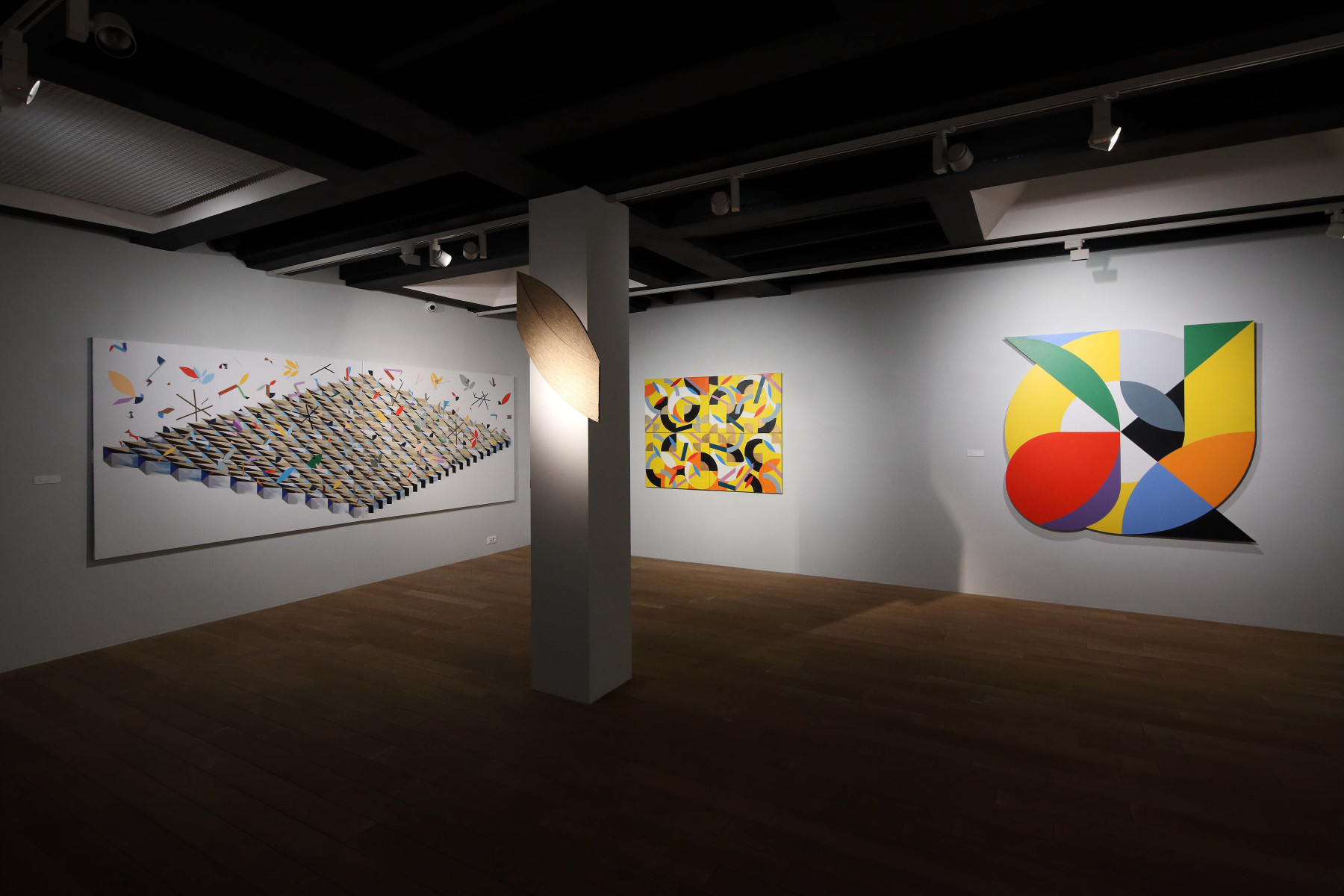
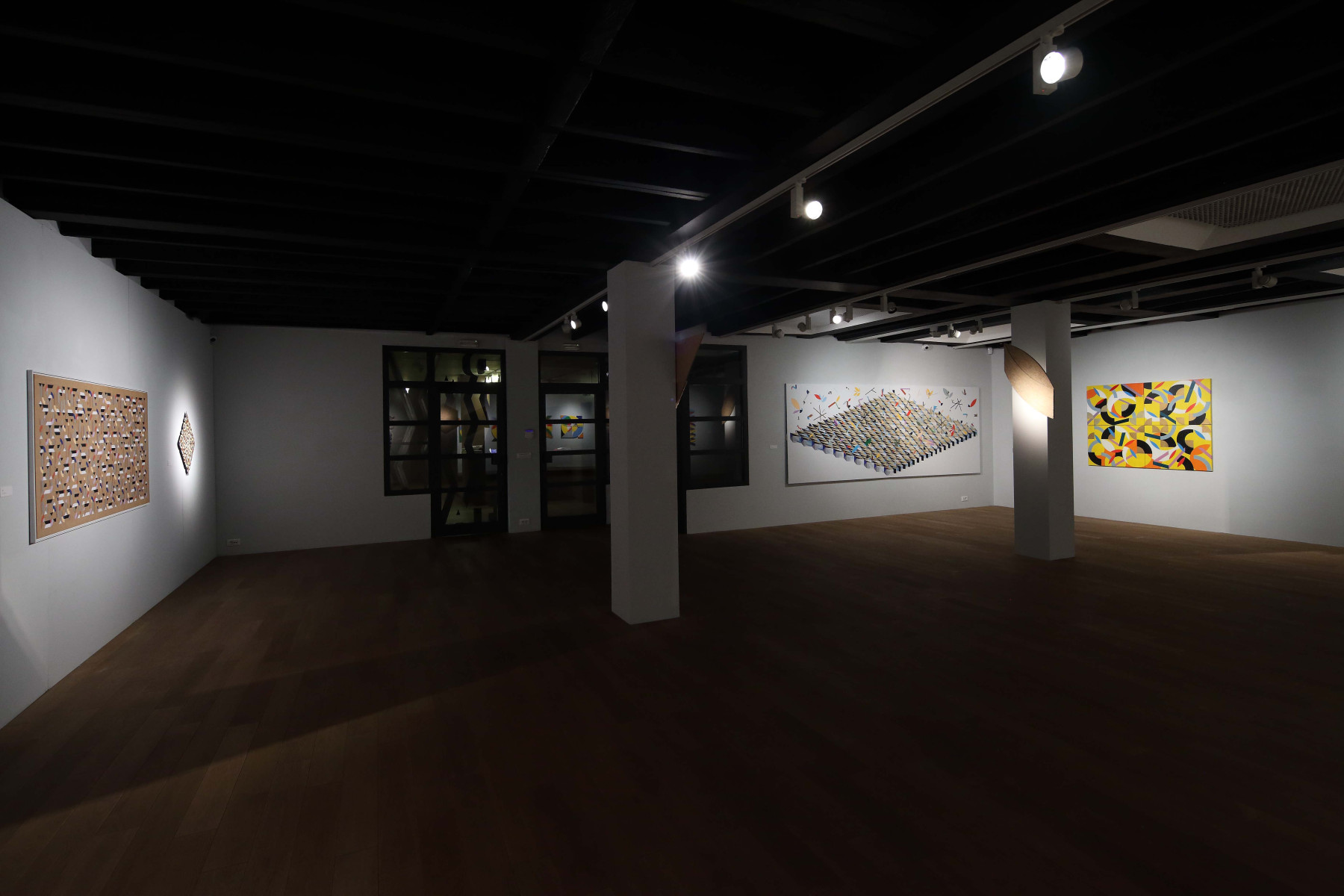
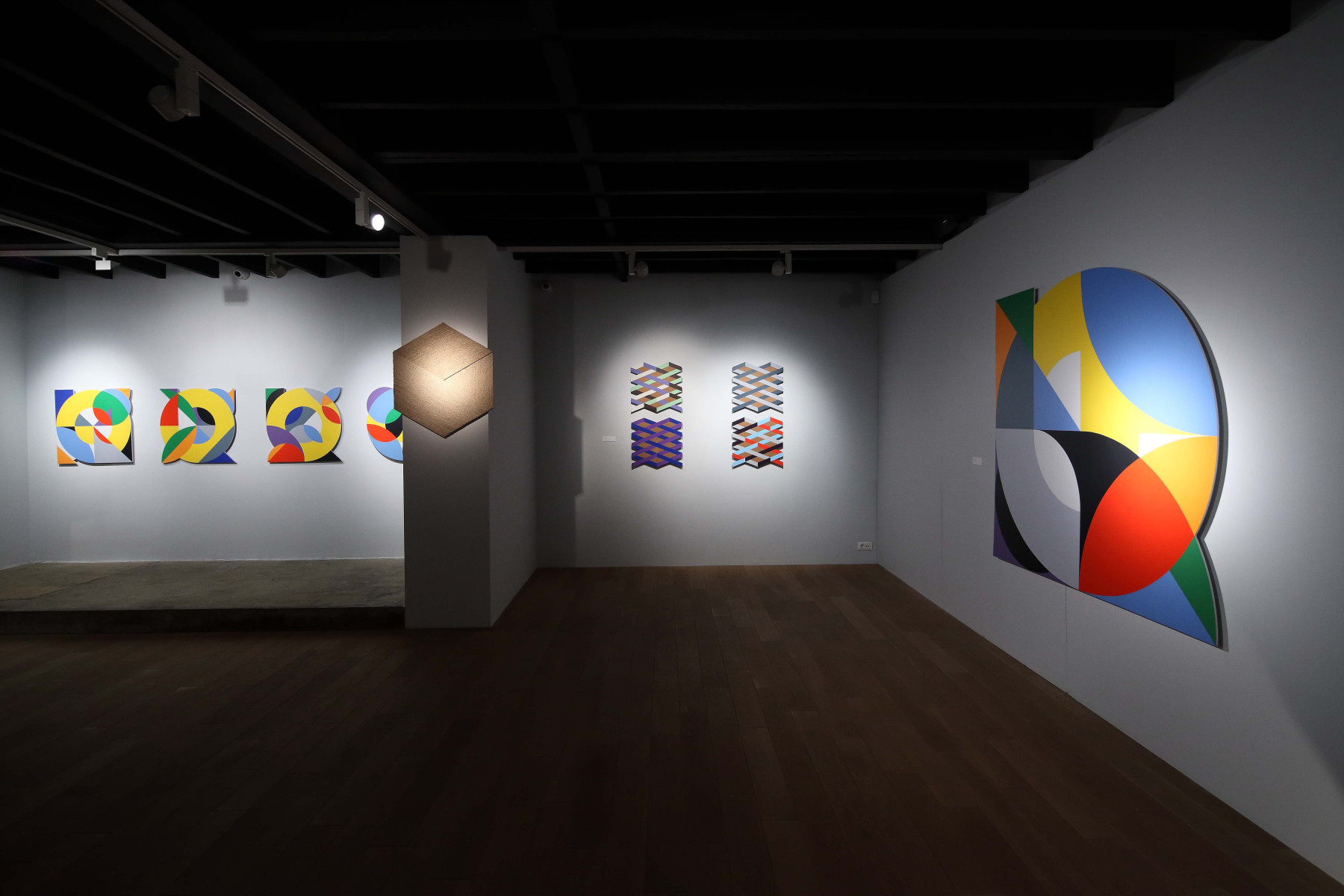
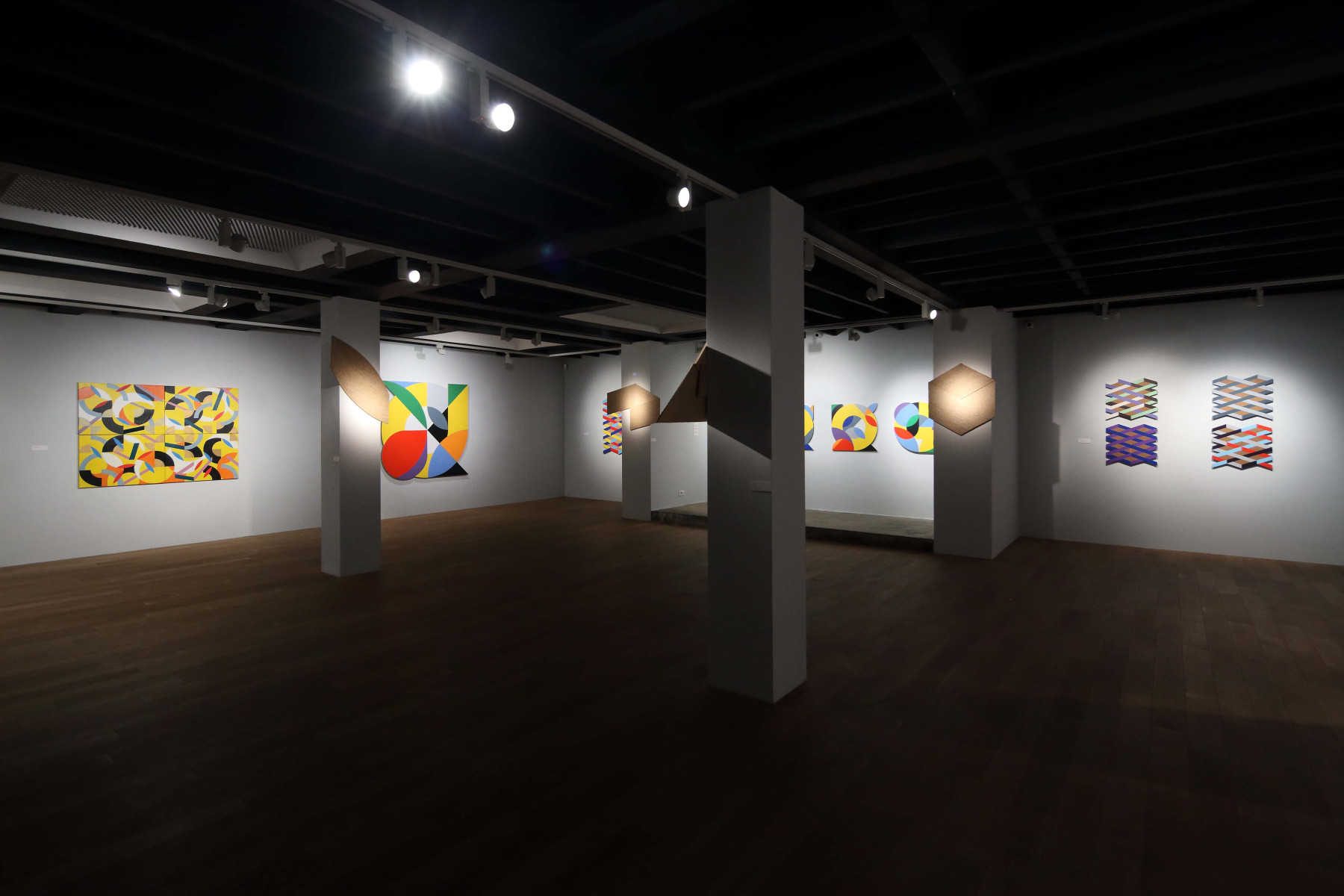
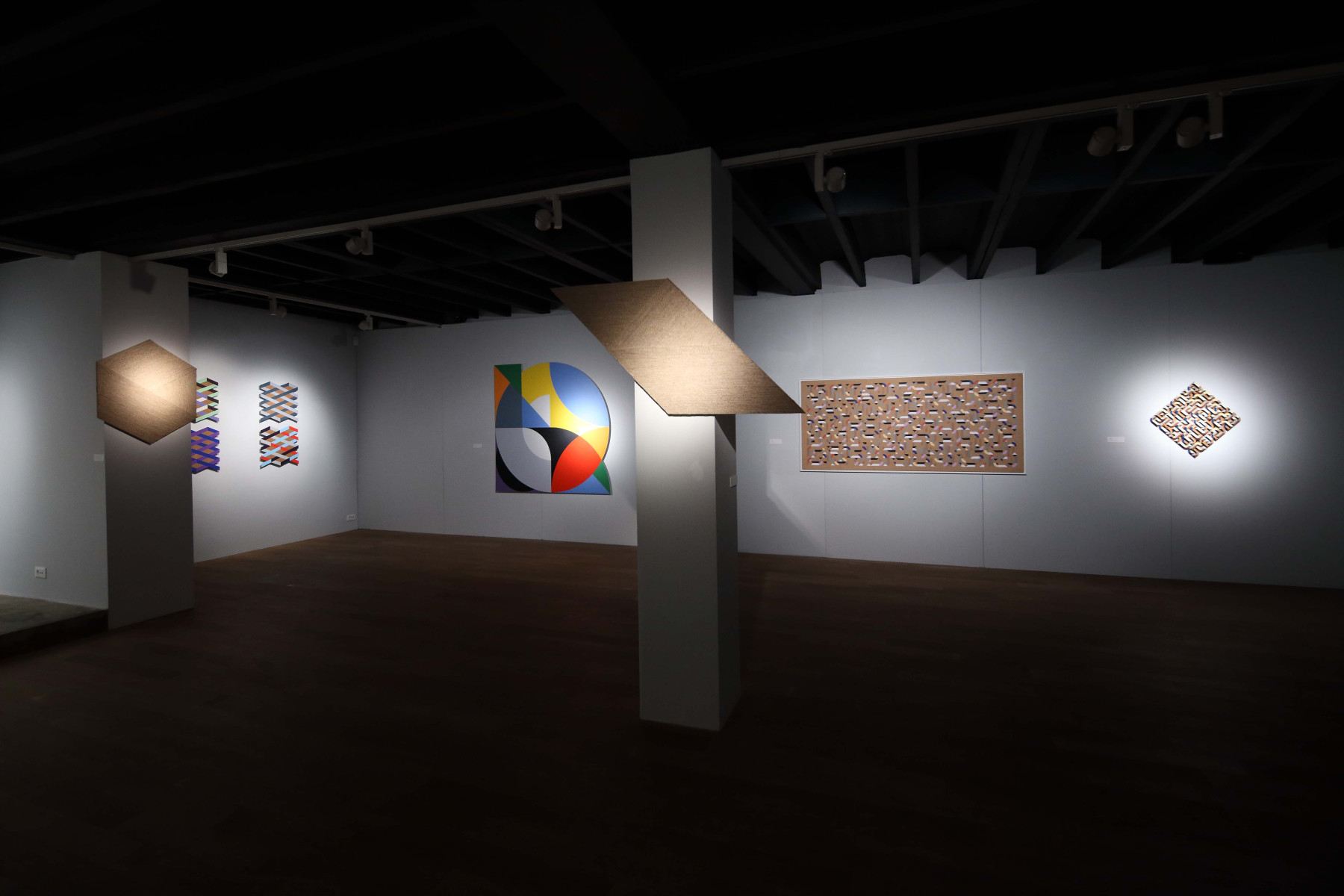
Text by Iva Körbler
The current moment in contemporary art poses great challenges
for young artists trying to continue along the already established
paths of tradition and sensibility immanent to abstract (geometric)
art because it may seem that in abstract art everything has
been seen, explored and experienced. Despite this view, infinite
possibilities for mathematical variations exist within different
models. Also to be held in mind is the impact of the non-linear
fractal structures which have made their way from architecture
into the visual arts vocabulary. However, invention and novelty
are not an easy goal to achieve. In recent years, the segment of
art which is strongly influenced by the legacies of neo-geo, op art
and constructivism has been dominated by the artist Duje Jurić,
a key figure in Croatian art. In the last two years, however, Damir
Sobota has come to the fore as a fresh and intriguing link in the
chain of the morphological and stylistic accomplishments in this
particular art domain.
In searching for a personalised approach to art Damir Sobota has
located a fertile starting point in the constructivist tradition, marked
by the aesthetic usually associated with industrial manufacture and
design of, for instance, automobiles or aircraft.1 Precise drawing
and balanced composition are the cornerstones of his inspiration.
Sentiment, mood and contemplation are not as much in evidence as
they are in colourist abstraction. Sobota’s work exhibits technical skill
and quite an analytical organisation of material where the underlining
idea, execution and construction are all equally important.
Integrated in his work are elements and traces of Malevich’s dynamic
suprematism from around 1916, spatial deconstruction of geometric
forms on the surface, compositions of Moholy-Nagy from the early
1920s, and the avant-garde spirit of the Bauhaus school. There is
also the influence of the dynamic and rhythmic black and white twodimensional
structures of Joseph Albers from the Bauhaus school
which functioned as the well nourishing almost all subsequent visual
art of this character. We must not fail to draw attention to yet another
source, i.e. the idea of linking music and geometric structures and
their distribution on a surface, and the attempts to attach the tones
in a musical scale to a certain colour scale. The idea of mathematical
proportion and variation is linked to the idea of harmony, not only
harmony of forms and composition but also tonal (colour) harmony.
Damir Sobota explains in an interview that his pictures could be
related to the genre of music known as minimal deep house, where
the same rhythm repeated with only minor changes has a very restful
effect and is, to some extent, reflected in his work.
Another source of inspiration for the young artist is the legacy
of the EXAT group, New Tendencies, Italian Azimuth and German
group Zero, as well as the so-called systems art. We cannot help
observing that Sobota’s pictures and picture-collages reflect the
general idea behind the exhibition of New Tendencies held in
1961, characterised by Almir Mavignier as “moving from painting
to object”2. His works do not conform to the standards of a regular
square or rectangular two-dimensional surface. His bands and
interwoven colourful structures in one of his series negate the usual
two-dimensional shape of the picture. He does not only explore
the possibilities of expanding the picture into an object but also
emphasises his rebellion against the common practise of framing
and ‘outfitting’ works of art, thus propounding the avant-garde
notion that a work of art is complete and finished when the artist as
the supreme authority over his creation says it is finished.
In a very brief period of time Damir Sobota has produced visually
intriguing art imbued with the auras of kindred spirits such as Ivan
Picelj, Aleksandar Srnec, Miroslav Šutej and Ante Kuduz. Happily,
he has avoided falling into the trap of mere reciting or paraphrasing
their characteristic morphologies. The general principle governing
the arrangement of structural units in his works exhibits two major
features: one is to multiply and break down geometric-colour patterns
and segments, and the other is to magnify and simplify the final visual
matrix. However, nothing is accidental or arbitrary – each work follows
a carefully designed basic scheme and informs subsequent playful
permutations that eventually take place on the surface. The sense
of ease and simplicity pervading the structural elements, intensified
by colour, is to be attributed to the mathematically calculated
proportions and to a thorough study of the world around. To this
artist, art is no mere pastime, decoration, or an aesthetically designed
product, but the end result of a deeply analytical exploration of
invisible energies played out in the scene, a drawing out into the open
of a deeper cosmic order, or disorder, onto the surface of the painting
or object. He tirelessly searches for some systems of logical thought
that help us hang onto this dimension of reality when existence gets
monotonous or chaotic. If we were to introduce into Sobota’s work
the sublime spirit as category, we could again relate this young
and perspective artist to the sources of Russian constructivism
and Bauhaus. A permanent metaphysical paradox in the rationalsentimental
duality discernible in the work of all important abstract
artists is also in evidence in Sobota’s work.